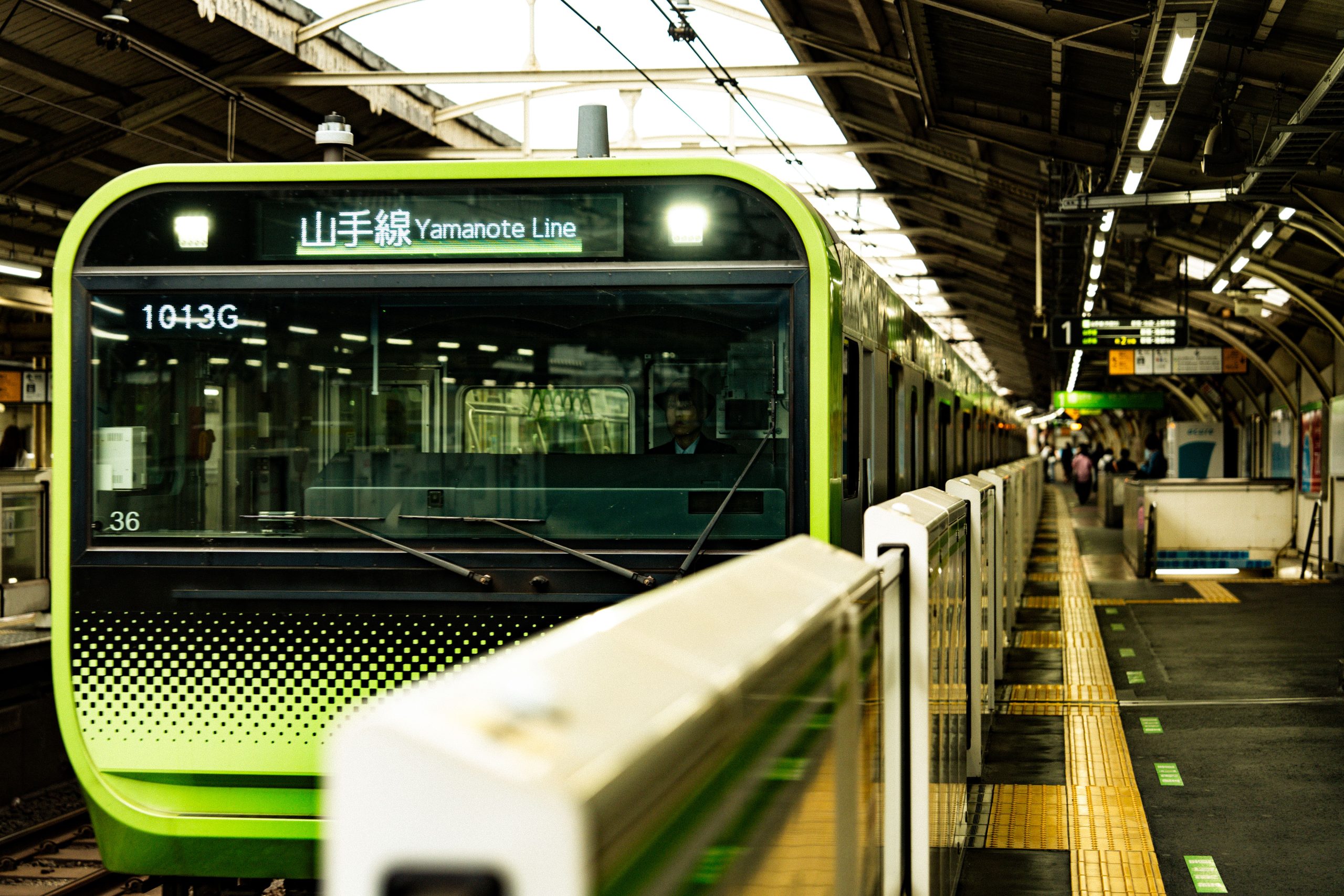
I’ve ridden this loop more times than I can count. Thirty stations, one green train, a little over an hour to go all the way around if you never got off. Most visitors ride the Yamanote Line dozens of times during a Tokyo trip without ever really seeing it, it’s just the thing that gets you from Shinjuku to Ueno. But every single stop on this loop has something worth knowing, even the ones you’d normally just pass straight through, and after three years of living on this line, I’ve got opinions about every single one of them.
This is that guide. Every station, in order, what’s actually there, the details most people never think to ask about, and whether it’s worth stepping off for. Some of these I’d tell you to build a whole afternoon around. A few of them, I’ll be honest with you, I still don’t really have a reason to get off at, and I’ll tell you that too.
This post contains affiliate links. Full details on my Affiliate Disclosure page.
Japanese Word to Know
How the Yamanote Line Actually Works
The Yamanote Line is a 34.5km loop connecting 30 stations around central Tokyo. Every train is local, stopping at every station, there’s no express version to worry about missing. Trains run every 2-3 minutes at rush hour, every 3-5 minutes off-peak. First train departs 4:26am, last one runs until 1:04am. A full loop takes about an hour if you never get off.
Trains run both directions simultaneously: clockwise (soto-mawari, the outer loop) and counter-clockwise (uchi-mawari, the inner loop). Platform signs list both directions with the next few major stations, check before boarding, going the wrong way can cost you 30-40 minutes on the long way round. I still double-check every single time, three years in, because I’ve made that mistake enough times to never fully trust myself.
Something most guides skip: the Yamanote Line isn’t actually a perfect circle operationally, JR East internally treats it as a corridor between Shinagawa and Tabata that happens to loop, sharing tracks with the parallel Yamanote Freight Line for cargo. You’ll never notice this riding it, but it’s why occasional freight-related delays can affect passenger service even late at night. For live service status, JR East’s official site is more reliable than any third-party app.
East Side: Tokyo to Ueno
Tokyo Station
The biggest hub on the loop, and Tokyo’s Shinkansen (bullet train) gateway. This is where I catch the bullet train whenever I’m heading out to see Fuji or make the trip toward Kyoto, and there’s a specific feeling to standing on that platform watching a Shinkansen glide in that never quite gets old, even after doing it a dozen times.
Even if you’re not traveling onward, Tokyo Character Street and Tokyo Ramen Street inside the station are worth a quick detour if you’re already passing through, though I wouldn’t go out of my way just for them. What I would go out of my way for: the station’s red-brick Marunouchi side, opposite the modern Yaesu side, is a genuinely striking piece of early-1900s architecture, restored to its original design after WWII damage. It’s completely free to just stand and look at, and most people rushing through never look up. 📍 Map
Kanda
A quiet transfer station most tourists never stop at on purpose, and honestly, I didn’t either for my first year here. Locally known for a genuine curry-shop density, this neighborhood is considered one of Tokyo’s real curry districts, the kind of place salarymen actually eat lunch, not a tourist recreation of one. Old-Tokyo business-district streets, almost no tourist crowd at all. If you want a lunch stop that feels like real Tokyo rather than a curated version of it, this is a solid pick. 📍 Map
Akihabara
Electric Town, and genuinely one of my favorite stops on the whole loop, if I’m being honest. I’ve covered this one in real depth in my free 7-day itinerary, so I’ll keep it short here rather than repeat myself: multi-story arcades, Yodobashi Akiba, and a real maid cafe culture if you’re curious. 📍 Map
Okachimachi
The quiet southern edge of Ameyoko Market, which properly starts here and runs north toward Ueno. I almost never get off specifically at this station, I usually walk it from the Ueno side, but if you’re coming from the south it’s a perfectly good entry point into the market instead of backtracking. Worth walking through on your way rather than treating as its own destination. 📍 Map
Ueno
Ueno Park, the Tokyo National Museum, Japan’s oldest zoo. I cover this whole neighborhood properly in Day 1 of my itinerary, so I won’t repeat all of it here, but it’s a genuinely easy half-day, and one of the few stops on this list where you could reasonably spend a whole afternoon without running out of things to do. 📍 Map
Bookmark this for later.
This one’s long, save it to Pinterest and actually come back to it when you’re planning for real.
Save to Pinterest →North Side: Uguisudani to Ikebukuro
Uguisudani
Most tourists have no real reason to get off here, it’s known locally for love hotels and not much in the way of visitor attractions, and in three years I don’t think I’ve gotten off here on purpose more than once or twice, usually by accident when I misjudged which stop I actually needed. Including it because a complete guide should be complete, not because I’m sending you here.
Nippori
One of my favorite “you won’t believe this is still in Tokyo” stops, and one I actively bring visitors to now instead of just the obvious spots. Something worth knowing before you arrive: Nippori Fabric Town and Yanaka Ginza are on essentially opposite sides of the station, fabric town is straight out toward the north, Yanaka Ginza is via the west exit down Yuyake Dandan (“Sunset Staircase”), a genuinely lovely spot to catch golden hour if your timing works out.
Try the menchi katsu (fried minced meat cutlet) from one of the stalls along the way, it’s become a small ritual of mine whenever I bring someone here for the first time, and I’ve never had someone not like it. 📍 Map
Nishi-Nippori
Mostly a quiet residential stop, worth it if you’re already at Nippori and want to walk to Yanaka Cemetery, a peaceful, atmospheric spot rather than a somber one, many of Tokyo’s historically notable figures are buried here among quiet, tree-lined paths. I’ve taken a slow walk through here more than once just to clear my head after a loud week in the city, it’s one of the few genuinely quiet places this close to central Tokyo. 📍 Map
Tabata
Primarily residential. Sits at the edge of the Yanaka area if you’re already exploring on foot, but not a stop I’d plan around, and I’ll be straightforward with you, I couldn’t tell you the last time I actually got off here myself.
Komagome
A real hidden gem, and honestly one of the stops I feel almost precious about, since so few visitors know it’s here. Rikugien Garden is one of the most beautiful landscape gardens in Tokyo, and most tourists have genuinely never heard of it, meaning you can actually enjoy it without fighting crowds the way you would at somewhere like Shinjuku Gyoen.
Something almost nobody knows: during peak autumn foliage and spring bloom periods, the garden extends its hours for special evening illumination, lanterns light the path and the whole garden takes on a completely different character after dark. I went once during an autumn illumination almost by accident, wasn’t even planning on it, and it’s stuck with me as one of the quietly best evenings I’ve had in this city. Check the official Tokyo Parks site for exact illumination dates each year, since they shift annually. 📍 Map
Sugamo
Locals call it “Grandma’s Harajuku,” and once you see Jizo-dori shopping street, you’ll understand why. 800 meters of shio-daifuku (salted rice cakes), traditional sweets, and famously, lucky red underwear at Sugamo Maruji. It’s a genuinely fun contrast to bring someone here right after Harajuku, same energy of a dedicated shopping street, completely different generation it’s built for.
A detail most visitors miss: at Kogan-ji Temple’s Arai Kannon statue, you’re meant to bring or buy a small cloth to actually wash the statue with, not just pour water, vendors near the temple sell these specifically for the ritual. I didn’t know this the first time I went and just stood there confused watching everyone else do it right, so now I always mention it. 📍 Map
Otsuka
A quiet, genuinely local residential stop with Gokokuji temple nearby. The real reason to know this name: Onigiri Bongo, one of the most famous rice ball shops in Tokyo. Worth knowing before you go: they don’t take reservations, popular topping options can sell out by early evening, and waits over two hours aren’t unusual. I waited about ninety minutes the one time I went, and I’d still say it was worth it, though I wouldn’t build an entire day around getting there, more like a stop you fold into a bigger day in this area. Arrive early or accept you might not get your first-choice topping. 📍 Map
Ikebukuro
A major hub in its own right, and one I think gets genuinely underrated by first-time visitors who default straight to Shinjuku or Shibuya instead. Sunshine City, big department stores, and Otome Road, an anime/otaku culture hub aimed more at female fans than Akihabara’s more male-skewing scene, worth knowing they’re genuinely different scenes, not the same thing in a different neighborhood. I’d send a first-timer here specifically if Akihabara felt overwhelming and they wanted something with a bit more breathing room. 📍 Map
West Side: Mejiro to Shibuya
Mejiro
A refined, quiet residential neighborhood, home to Gakushuin University, historically the school for Japan’s imperial family and aristocracy. Worth knowing exists even if you don’t get off, it’s a useful mental contrast to how loud the rest of this loop can feel. I’ve passed through more times than I’ve actually stepped out here, but the couple times I did, it genuinely felt like a different city than the one two stops away.
Takadanobaba
A genuine student town, Waseda University is right here, meaning cheap, good food and a young, casual energy. A fun detail worth knowing: this neighborhood reportedly has one of the highest concentrations of ramen shops per capita anywhere in Tokyo, a direct byproduct of feeding a dense student population for decades. I’ve never had a bad bowl here, and I’ve eaten a lot of bowls here. Look for the Astro Boy mural near the station, a nod to creator Osamu Tezuka’s connection to the area. 📍 Map
Shin-Okubo
Tokyo’s Korea Town, one stop from Shinjuku. K-pop merchandise shops, Korean BBQ, Korean skincare. Worth knowing before you go: this station has only one real exit/entrance, and on weekends the surrounding streets get genuinely packed, shoulder to shoulder in places. If you want to browse comfortably rather than shuffle through a crowd, go on a weekday or early on a weekend morning, I learned that one the hard way on a Saturday afternoon I won’t be repeating. 📍 Map
Shinjuku
The busiest train station on the planet by passenger volume, per Guinness World Records, and still somehow one I never fully feel like I’ve mastered the exits of, even now. I’ve written extensively about this neighborhood, Kabukicho, Golden Gai, and more, in my full itinerary’s Day 2. 📍 Map
Yoyogi
A quiet station most people pass straight through, useful mainly for Yoyogi Park next door if you’re not already coming from the Harajuku side. I mostly know this stop as the place I transfer trains, not a place I go, and I think that’s an honest way to describe it to you too.
Harajuku
Takeshita Street’s teenage fashion chaos on one side, Meiji Shrine’s genuine forested calm about a minute’s walk on the other. Two completely different Tokyos within a five-minute walk of each other, and honestly one of the best single illustrations of how contradictory this city can be in the best way. I like sending people through Takeshita Street first and Meiji Shrine second, the contrast lands harder in that order. 📍 Map
Shibuya
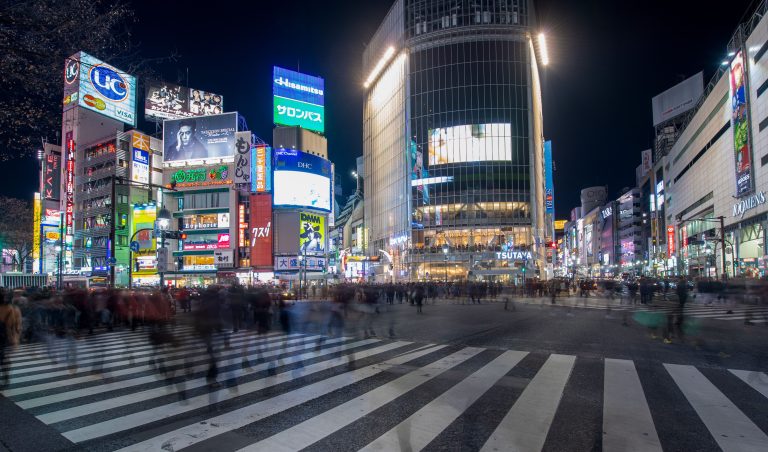
Scramble Crossing, Shibuya Sky, all of it. Already covered in real depth in Day 3 of my itinerary, and still a stop that gets me every time I come up out of the station into that crossing, no matter how many times I’ve done it. 📍 Map
The complete day-by-day breakdown for every neighborhood mentioned above is free. Get it sent straight to you here.
South Side: Ebisu to Yurakucho
Ebisu
Yebisu Garden Place is the draw, home to a beer museum (the neighborhood is named after the Yebisu beer brand), chic bistros, and a photography museum. A small detail worth knowing: the connection from the station to Garden Place is via the Ebisu Skywalk, a covered moving walkway that’s a minor photo spot in its own right, worth the extra two minutes rather than finding a street-level route. This is one of my go-to “I want a calmer evening” stops when I’ve had enough of the bigger, louder neighborhoods. 📍 Map
Meguro
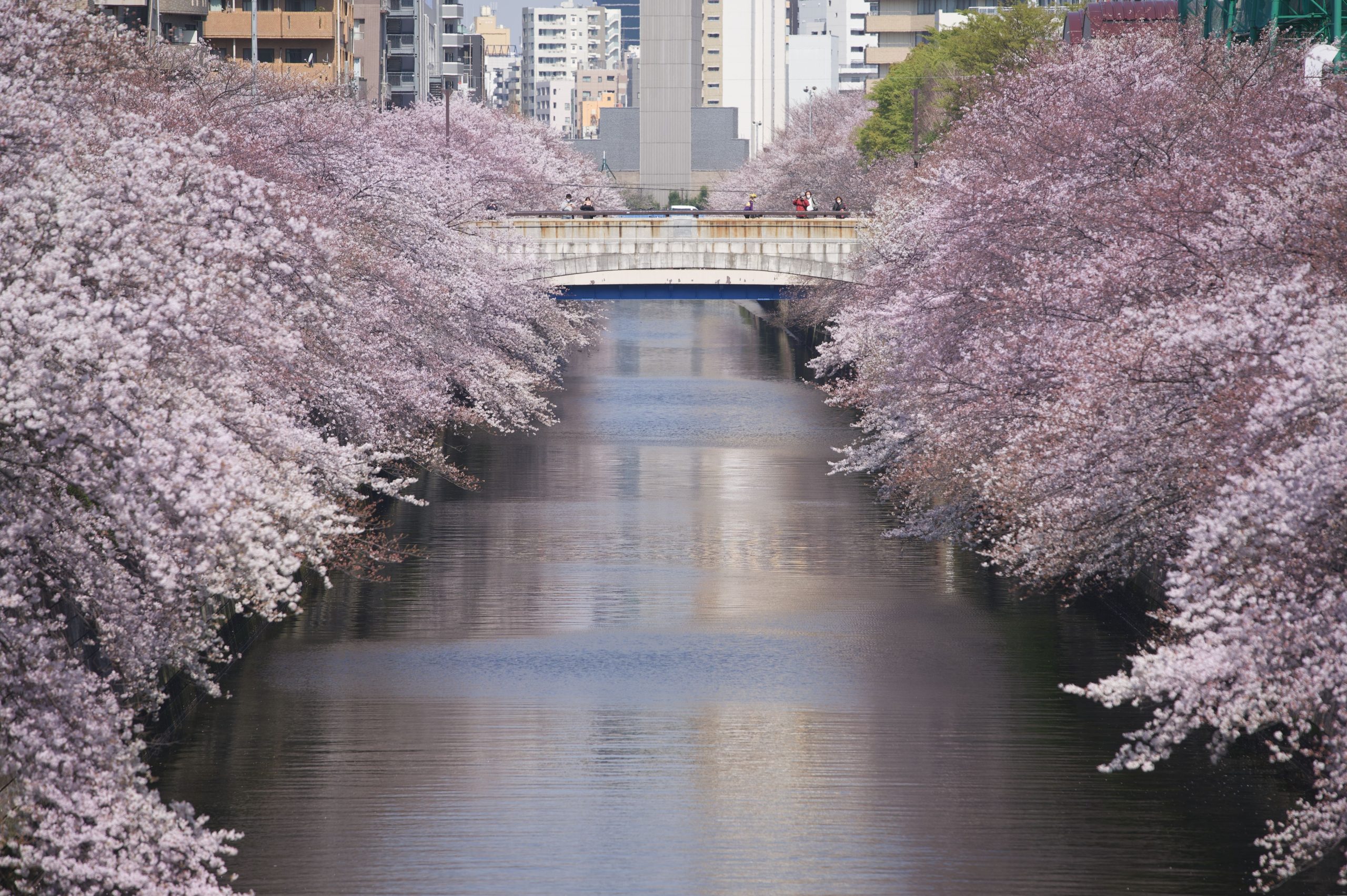
The Meguro River is one of the prettiest cherry blossom spots in Tokyo and far less mobbed than the famous ones, I’d genuinely pick this over some of the more famous hanami spots if I only had one afternoon during peak bloom. Meguro Gajoen hides the Hyakudan Kaidan (“100 Steps”), a registered Cultural Property connecting seven ornately decorated Showa-era function rooms.
Important practical detail: the Hyakudan Kaidan is only open to the public during specific special exhibition periods, not daily, check their event calendar before planning a visit around it specifically. I made the mistake of showing up without checking once and just got to see the outside, worth avoiding that if this is a priority for you. 📍 Map
Gotanda
Overlooked, and that’s exactly why it’s worth knowing. Real under-the-tracks izakaya culture here, small standing bars serving sake, beer, and grilled skewers, with a fraction of the tourists you’d find at similar spots elsewhere. This is a nighttime neighborhood, showing up at 2pm expecting the same energy will leave you unimpressed, I know because I did exactly that the first time and left thinking there was nothing here. Went back at 8pm a few months later and completely changed my mind. 📍 Map
Osaki
Mostly a business district, genuinely not much reason to get off here during the day. At night, the local food and drink scene is better than you’d expect from how skippable it looks on a map, though I’ll admit this is one of the stations on this whole loop I have the least personal history with, it’s just never quite made it onto my regular rotation.
Shinagawa
A major hub with a hidden gem: Shinagawa Shrine has a miniature Mount Fuji you can actually climb. Context most guides skip: this is what’s called a fuji-zuka, a mini Fuji mound, dozens of these were built around Tokyo historically for people who couldn’t make the real pilgrimage to Mt. Fuji itself, climbing one was considered spiritually equivalent. It’s a genuinely fun five-minute detour with real history behind it, not just a novelty, and I always think it’s funny watching people’s faces when they realize they can actually climb it. 📍 Map
Takanawa Gateway
The newest station on the entire loop, opened in 2020, designed by architect Kengo Kuma. Worth a glance if you’re into design or architecture, otherwise mostly a curiosity rather than a destination, and I mean that honestly, not as a brush-off, it’s genuinely one of the more interesting pieces of modern architecture on this whole list, just not somewhere you need half a day.
Tamachi
Primarily a business district stop, and I’ll be straightforward, I don’t have much of a personal story here. It’s one of the honest gaps on this loop for me.
Hamamatsucho
Your transfer point for the Tokyo Monorail to Haneda Airport, and one I’ve used more times than almost any other stop on this list purely for that reason. Zojoji Temple and solid Tokyo Tower views are nearby if you have a layover-length window of time, worth the detour if your flight isn’t for a few more hours and you don’t want to just sit in a departure lounge. 📍 Map
Shimbashi
Classic salaryman Tokyo, izakaya packed under the train tracks, after-work drinking culture in full swing most evenings. A genuinely different texture of nightlife than Shibuya or Shinjuku, quieter in volume but somehow louder in character once you’re actually sitting at one of those tiny bars. It’s one of my favorite places to just sit and watch the city be itself for an hour.
Yurakucho
The gateway into Ginza, home to Yurakucho Gado-shita, an under-the-tracks yakitori alley I already recommend as a nightlife stop in Day 4 of my itinerary. 📍 Map
How Much Does Riding the Yamanote Line Cost?
Individual rides range from ¥ 150-¥ 210 depending on distance. If you’re riding it often, a Suica or Pasmo IC card, loadable onto your phone, is far more convenient than paper tickets.
| Trip Type | Cost |
|---|---|
| Single short ride (1-3 stops) | ¥ 150-¥ 170 |
| Single longer ride (across the loop) | ¥ 200-¥ 210 |
| Full day of heavy Yamanote use | ¥ 800-¥ 1,200 total |
| JR Tokyo Wide Pass (3 days, unlimited JR East) | ¥ 15,000 |
Tip: Unless you’re also taking day trips outside central Tokyo (Nikko, Kawaguchiko, etc.), a Suica loaded with cash is usually cheaper than a multi-day pass for Yamanote-only riding. Check current fares directly on JR East’s official ticketing page, since prices do shift periodically.
Best Time to Ride It
The schedule runs essentially the same year-round, but when you ride matters more than you’d think. Weekday rush hour (7:30-9:30am, 5:30-7:30pm) is genuinely intense, packed enough that pushing is a normal, expected part of boarding, avoid it with luggage if you can, I still plan around it myself even after three years. Late evening (after 10pm) is quiet and comfortable, honestly one of the better times to just ride the full loop for the experience of it, I’ve done that more than once on a slow night just to think.
Frequently Asked Questions
Does the Yamanote Line go to Tokyo Disneyland?
No. Tokyo Disneyland is served by the Keiyo Line and Disney Resort Line, not the Yamanote Line. Transfer at Tokyo Station or Shin-Kiba.
Is the Yamanote Line covered by the JR Pass?
Yes, the standard nationwide JR Pass covers the Yamanote Line, along with most other JR East lines within Tokyo.
Can I ride the whole loop on one ticket?
Only if your Suica/Pasmo fare covers the full distance, or you exit and re-tap. A single ticket doesn’t let you ride the full loop back to your starting point for free, the fare system charges by distance traveled.
What’s the best station to start a Yamanote Line loop ride from?
Any station works since it’s a loop, but Shinjuku or Shibuya are the most common starting points simply because most visitors are already staying near one of them.
How long does the full loop take?
About 60 minutes if you rode it start to finish without getting off anywhere.
Quick reminder: some of the links in this post are affiliate links. If you book or buy through them, I may earn a small commission at no extra cost to you, it’s part of how this site stays free to run.
Quick Links
Written by Johnathan. 3 years living in Japan, still riding this same green loop more often than I probably need to.