 By Johnathan
 This was one of my first festivals in Japan, and looking back, I couldn’t have asked for a better one to start with.
If you’re stationed at Yokota or living anywhere near Fussa Station, you don’t have to plan a trip for this one. You just have to walk outside. It’s about a 5-10 minute walk outside the main gate to get there, which for a first festival is about as low-stakes as it gets. No trains to figure out, no itinerary to plan around, just leave your place after dinner and follow the crowd. If you’re coming from further into Tokyo, though, it’s worth knowing how the Ome and Chuo Line connections actually work before you head out.
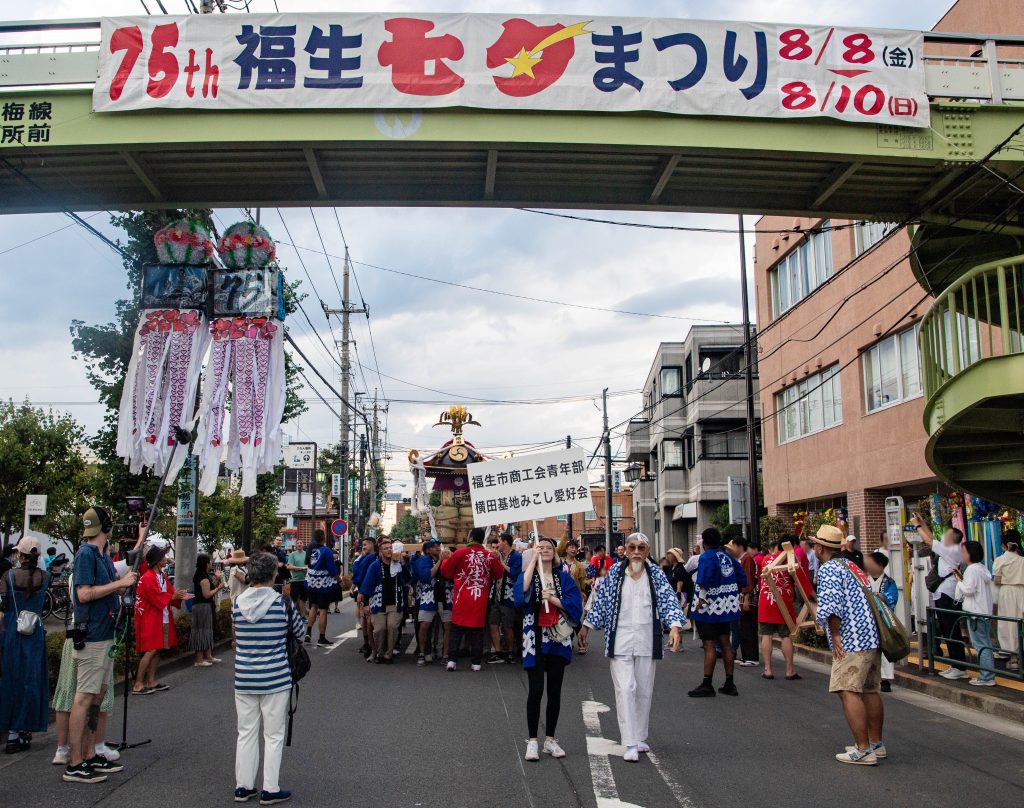
Every August, the streets around Fussa Station stop being the quiet, unremarkable stretch you walk through to get groceries and turn into something else entirely: lanterns strung overhead, a hundred stalls selling festival food, a folk dance parade working its way down the main street, and more people out at once than you’ll see in Fussa the other 362 days of the year combined. That’s the Fussa Tanabata Festival, and if you’re going to go to one Japanese summer festival while you’re stationed out here, this is the one that requires zero planning and rewards you the most for showing up.
What the Fussa Tanabata Festival Actually Is
Tanabata, the Star Festival, is a nationwide tradition based on an old legend: two star-crossed lovers, Orihime and Hikoboshi, separated across the Milky Way, allowed to reunite just once a year. Most of Japan celebrates it on July 7th. Fussa, along with a handful of other towns, celebrates it in August instead, which works out well for anyone stationed here, since it means you get a second wave of Tanabata energy after Tokyo’s bigger July events have already wrapped up.
This isn’t some small neighborhood gathering, either. The Fussa Tanabata Festival started in 1951, which makes the 2026 event the 76th year running, and it now pulls in something like 400,000 visitors over its three days, per the official GoTokyo event listing. For a town the size of Fussa, that’s not a festival, that’s basically the entire local economy showing up on your doorstep for a weekend.
2026 Dates
August 7-9, 2026.
It runs a full three days, and I’d actually recommend treating it that way instead of trying to cram everything into one night. I went two days myself, and I’m glad I did. The first night is for figuring out the layout and getting your bearings. The second is for actually working through your list of what to eat and where to stand for the parade.
Evenings are when it actually comes alive. The lantern displays and decorations are the whole point, and daylight does them no favors. Show up after dinner, not in the afternoon heat.
Before You Head Over: Make a Pit Stop
Right outside the main gate, there’s a 7-Eleven, and I’d genuinely recommend stopping there before you walk down to the festival. That’s where I had my first chu-hi ever, specifically a Strong Zero, and it felt like the right way to kick off a first Japanese festival.
If you haven’t run into Strong Zero yet, it’s Suntory’s canned chu-hi line, and it comes in more flavors than you’d expect walking past it the first time: Double Lemon, Double Peach, Orange & Mandarin, Double Pineapple, Mango, Red Apple, Double Lime, and more. My personal favorite is the strawberry.
Here’s the important part: these are strong. The name is not marketing exaggeration. Most run around 9% ABV, which is noticeably higher than a regular beer, and the fruit flavor does a really good job of hiding how much alcohol is actually in the can. One can will already have you feeling pretty buzzed, especially if you don’t drink a lot. Pace yourself, especially if it’s your first one like it was mine.
One more practical tip before you go: bring a portable fan. August in this part of Japan is legitimately hot, and you’re going to be standing around outside in a crowd for a few hours. A cheap handheld or neck fan makes a bigger difference than you’d think.
Quick packing list, if you want it spelled out:
- Cash (small bills, stalls run on it)
- A portable/handheld fan
- Comfortable shoes, you’ll be on your feet for hours
- A small hand towel (Japan’s humidity means you will sweat, and public restrooms often don’t have paper towels)
- Tissues (same reason, some restrooms don’t have toilet paper either, it’s a normal thing to just carry a small pack)
- A phone charger or battery pack if you’re planning on taking a lot of photos
How Much Cash Should You Bring?
Most stalls at the Fussa Tanabata Festival only take cash, no card, so don’t count on tapping your way through this one. I’d budget around ¥6,000, which is generally enough to cover several rounds of street food, a couple of drinks from the vendors themselves, and a game or two without feeling like you’re rationing yourself all night. As a rough breakdown of what that gets you: a few skewers of yakitori, a tray of takoyaki, a shaved ice, a beer or chu-hi from one of the drink stalls, and a round or two at one of the game stalls, with a little left over for whatever smells too good to skip on your way past.
If you end up running low, you’re not stuck. That same 7-Eleven right outside the main gate has an ATM, and Seven Bank ATMs are one of the few genuinely reliable options in Japan for withdrawing cash on a foreign card. Worst case, it’s a five-minute walk back to reload and return.
The Festival Itself
Once you’re actually there, the layout is centered around Fussa Station and the main street in front of City Hall, lined with something like 100 food and game stalls run by local residents. That last part matters more than it sounds like it should. It’s the difference between festival food that tastes like every other festival in Japan and food that tastes like the people selling it actually live here.
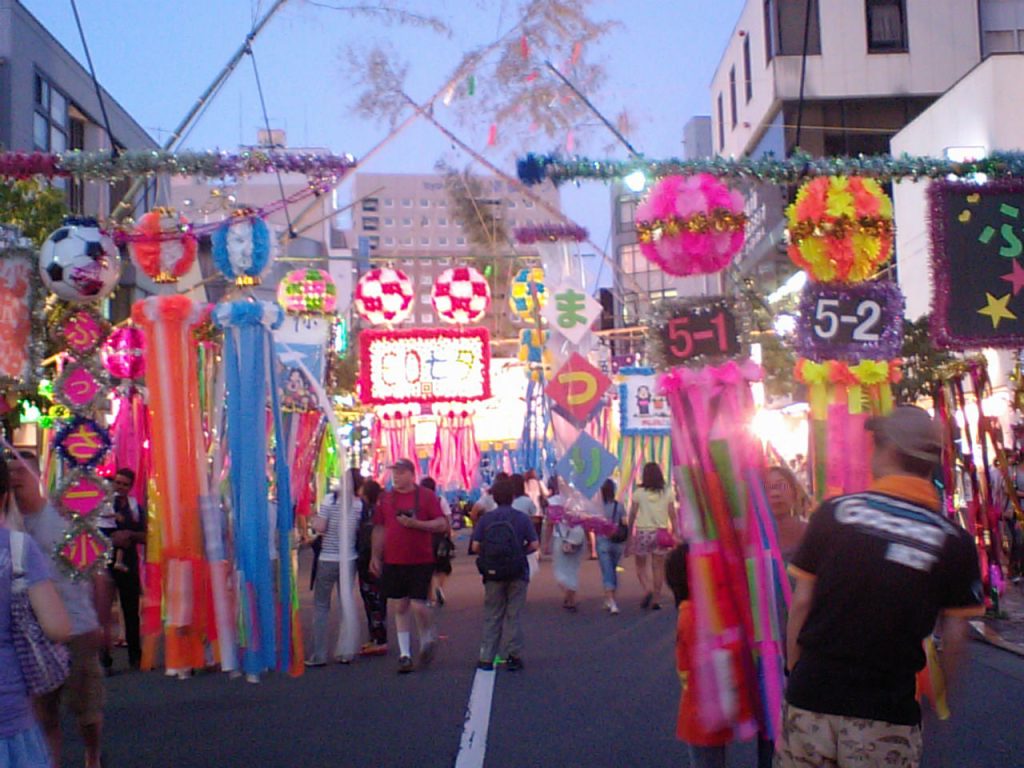
My approach, and what I’d recommend for anyone going for the first time, is to skip the idea of sitting down for one big traditional meal and instead just walk the length of the festival trying a little of everything. I love a proper sit-down meal as much as anyone, don’t get me wrong, but there’s something genuinely fun about grazing your way down the street, stall by stall, and stopping wherever smells good.
That’s also how I ended up finding the thing I’d now recommend over almost anything else at the festival: a Korean corn dog, the kind coated in sugar. I had never had one before that night, and I fell in love with it immediately. If you see a stall selling these, stop. Don’t overthink it. Just get one.
Beyond the corn dog, here’s what else you’ll run into stall to stall, in case you want a mental list before you go:
- Yakitori — grilled skewers, and this one’s personal: it’s genuinely one of my favorite street foods in Japan, period, not just at festivals. Get the shio (salted) kind if you see it as an option next to the sauce-glazed version. Simpler, and it lets the chicken actually taste like something instead of getting buried under sauce.
- Yakisoba — stir-fried noodles, the single most common matsuri food in the entire country. If you’ve never had it, this is as good a place as any to start.
- Takoyaki — octopus balls, crispy outside, molten in the middle, topped with sauce, mayo, and bonito flakes that flutter in the heat like they’re alive. Order these last if you’re grazing, they’re hot enough to slow you down.
- Kakigori — shaved ice, and after twenty minutes of standing in August heat, this is the single most effective purchase you can make. Strawberry and melon are the classic flavors, but stalls often run something seasonal too.
- Ringo-ame — candy apples, glossy red and genuinely more common at Japanese festivals than they are back home.
- Ikayaki — grilled squid, brushed with a soy-based glaze. It smells intense before you taste it, and it’s better than the smell suggests.
None of this is exclusive to Fussa specifically, this is standard matsuri food you’ll see at festivals all over Japan, but it’s worth knowing what you’re looking at before you’re standing in front of a menu board written entirely in Japanese, trying to guess.
Beyond the food, there’s a folk dance parade working its way through the crowd, the Tanabata Orihime contest (a local pageant tied directly into the festival’s namesake legend), and a stage at Okano Plaza running performances and character shows through the evening. There are also games scattered throughout, the classic matsuri kind, goldfish scooping and shooting galleries and the like. It’s a genuinely good vibe from start to finish, and it’s easy to see why locals treat this as the highlight of their summer.
Yes, You Can Drink in Public Here
One of the most surprising things I learned at this festival, and honestly one of the most surprising things about Japan in general when you first arrive, is that you can legally drink in public here, essentially anywhere. Coming from the US, where open containers can get you in real trouble depending on where you are, that took some adjusting to.
That freedom comes with an unwritten but very real expectation: don’t be the person who ruins it. Don’t get belligerent, and don’t leave your empty cans or trash lying around when you’re done. Japan is an extraordinarily clean country, and that cleanliness isn’t an accident, it’s the result of everyone quietly holding up their end of an agreement. If you drink, drink responsibly, and help keep it that way. Enjoy the freedom, but don’t be the reason it gets tightened up.
Nighttime Safety
This festival runs late into the night, and if you’re coming from somewhere that a huge nighttime crowd makes you a little cautious, you can relax here. I never had a single problem walking around at night during this festival, or honestly anywhere in this area after dark. Japan’s reputation for safety isn’t exaggerated, and a festival crowd this size, in a town this connected to the base, is about as low-risk a nighttime environment as you’ll find. Enjoy it until it wraps up. You don’t need to rush home before dark like you might elsewhere.
Japanese Word to Know: tanzaku (短冊) Pronounced tahn-zah-koo. These are the thin strips of colored paper you’ll see tied to bamboo branches all over the festival. People write a wish on one and hang it up, a tradition that goes straight back to the original Tanabata legend. Write your own and something shifts, you stop feeling like you’re just watching the festival happen around you and start feeling like you’re actually part of it.
Why This One’s Worth Prioritizing
There are bigger Tanabata festivals in Tokyo. Asagaya’s is older in some ways, Hiratsuka’s pulls a bigger regional crowd. But none of them are a five-minute walk from where you’re already living if you’re stationed at Yokota, and that changes the math completely. You’re not burning a whole day of leave and a train ticket to see this one. You’re deciding whether to walk outside after dinner.
It’s also, genuinely, a smaller and more manageable festival than some of the bigger Tokyo events, which makes it a great one to start with if you’re new here. You get all the atmosphere, all the food, all the lanterns and parade energy, without feeling completely overwhelmed by scale the way you might at somewhere like Asakusa on a big event night. Everyone around you is having a good time, it stays that way well into the night, and it’s the kind of low-pressure, high-reward first festival experience I’d recommend to anyone who just landed here and isn’t sure where to start. If you’re still putting together your first few weeks here, my free 7-day Tokyo itinerary is a good next stop, this festival slots into it easily if the timing lines up.
Frequently Asked Questions
When is the Fussa Tanabata Festival in 2026?
August 7-9, 2026, centered around Fussa Station and the street in front of City Hall.
Is the Fussa Tanabata Festival free to attend?
Yes, walking through and enjoying the decorations, parade, and performances is free. You’ll pay out of pocket for food, games, and drinks at the stalls, same as any Japanese matsuri.
How do I get to the Fussa Tanabata Festival from Yokota Air Base?
It’s about a 5-10 minute walk from the main gate. From further into Tokyo, it’s about 45 minutes from Shinjuku via the Chuo Line, occasionally with a transfer to the Ome Line at Tachikawa.
Is it safe to walk around the Fussa Tanabata Festival at night?
Yes. The festival runs late into the evening, and it’s a genuinely safe, family-friendly crowd. I never had any issues walking around at night during this festival or in the surrounding area.
Can you really drink alcohol in public in Japan?
Yes, drinking in public is broadly legal across Japan, including at festivals like this one. Just drink responsibly, don’t get belligerent, and clean up after yourself, it’s a privilege worth not abusing.
Is the Fussa Tanabata Festival good for kids?
Yes. The character shows and stage performances at Okano Plaza are specifically kid-friendly, and the atmosphere overall is family-oriented rather than a nightlife event.
What happens if it rains during the Fussa Tanabata Festival?
Like most outdoor matsuri in Japan, light rain usually doesn’t cancel anything, stalls and the parade generally continue. Heavier rain can affect specific performances or shorten hours, so if the forecast looks rough, check local event listings closer to the date rather than assuming it’s called off entirely.
Do I need to speak Japanese to enjoy the Fussa Tanabata Festival?
No. Pointing at food and holding up fingers for quantity works fine at festival stalls, and the atmosphere itself, lanterns, music, crowds, doesn’t require a shared language to enjoy. It helps to know a few basics, but it’s genuinely not a barrier here. On top of that, most people you’ll run into, especially anyone younger or working a stall aimed at a general crowd, know at least basic English, enough to get you through an order or a simple exchange without much trouble.
Curious what else is worth doing right around base? Everything Near Yokota’s Gates You Should Actually Know About covers the practical stuff, food spots, and everything else I wish someone had told me before I got here.