 By Johnathan
 I already touched on izakaya culture in my guide to living near Yokota Air Base, but it deserved its own post, because three years of trial and error taught me more about ordering, etiquette, and finding the right spot than I could fit into a few paragraphs.
If you’re stationed at Yokota, visiting someone who is, or just passing through western Tokyo and want a real night out instead of a tourist-menu experience, here’s what actually works.
Why These Places Became Home Base for Me
Some of my best memories from three years in Japan happened at izakayas, not on some big trip somewhere. A few of us from my unit would end up at one most nights, and more often than we probably should admit, we were there until close. Good food kept coming, drinks kept coming, and the conversation just never really stopped.
There’s something about that atmosphere specifically that I haven’t found anywhere else, not in any bar back home, not anywhere else in Japan either. Maybe it’s the way you’re seated the whole night instead of standing around, or the way the small plates keep the table busy, or just the fact that nobody’s rushing you out. Whatever it is, it turns a regular Tuesday into one of those nights you actually remember years later.
After a long, grinding day on duty, an izakaya with people you trust is about as good a stress reliever as exists. Good laughs, good food, and a room full of people who understood exactly what kind of day you’d had without needing to explain it. If you take nothing else from this post, take this: find your own regular spot, and go often. That’s where the real memories come from.
What Makes an Izakaya Different From a Bar
An izakaya isn’t really a bar in the American sense, even though that’s the easiest comparison. You’re seated the entire time, there’s a constant stream of shared small plates alongside the drinks, and the whole point of the night is lingering, not standing around with a drink in hand. Think of it as somewhere between a pub and a tapas restaurant, except it’s been a core part of Japanese social life for a very long time, and almost everyone here has their own regular spot the same way people back home have a regular bar.
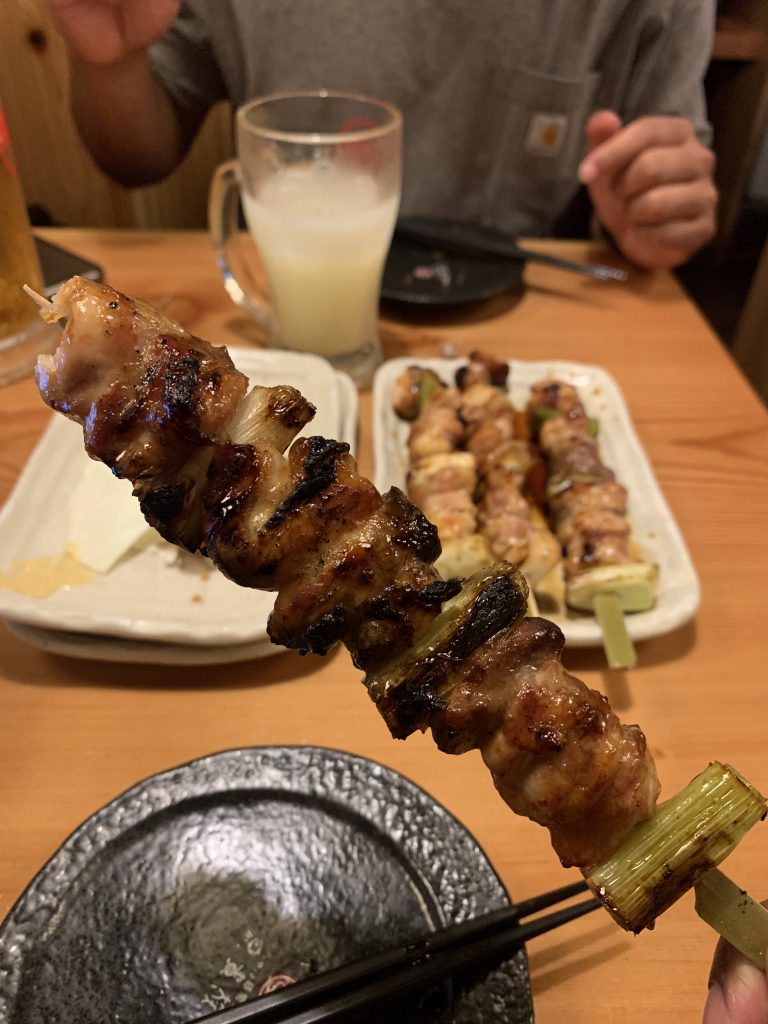
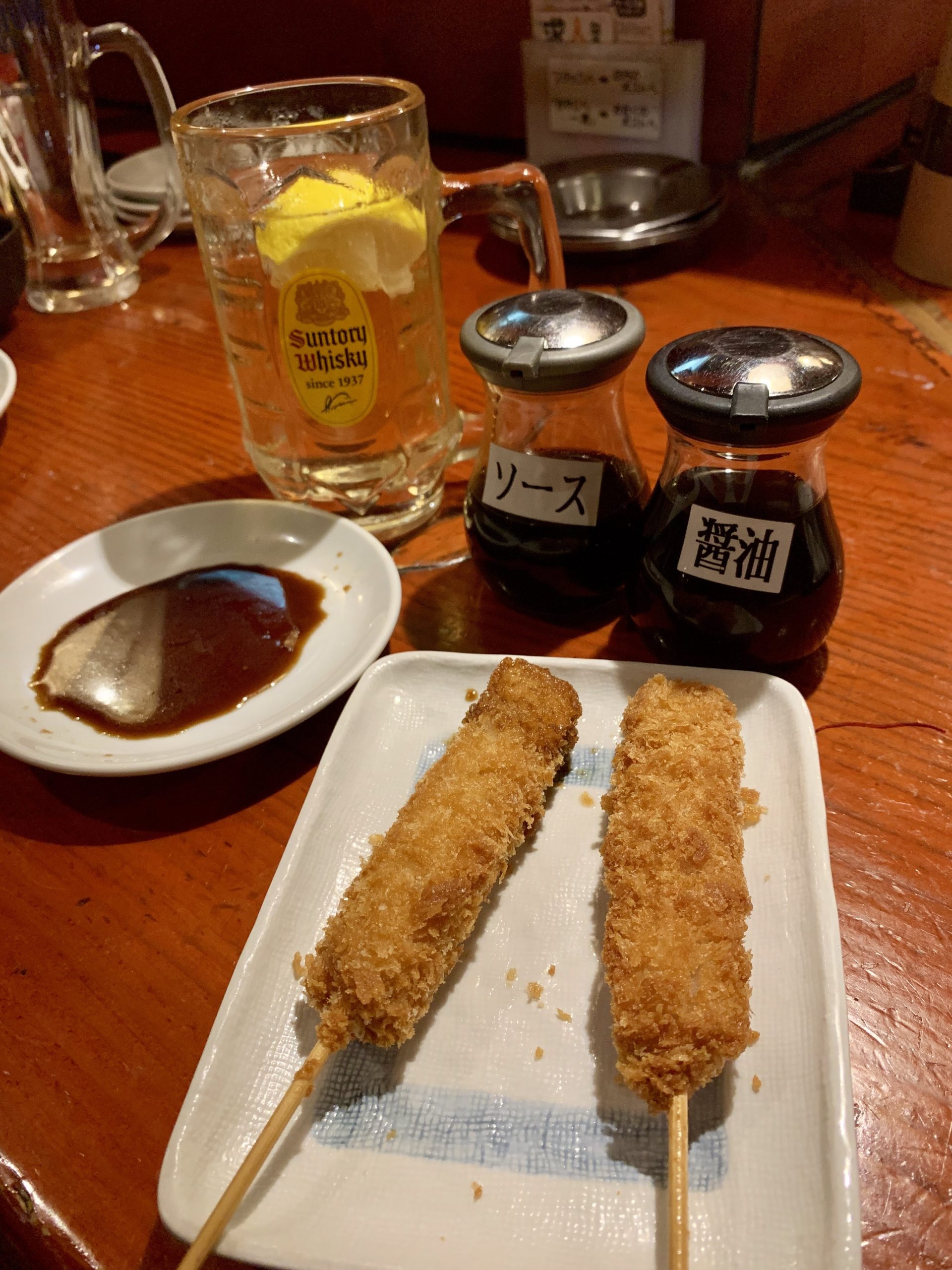
Food-wise, expect things like karaage (Japanese fried chicken), yakitori skewers, edamame, sashimi, and a rotating list of small dishes that go well with a cold drink. Almost nothing on the menu is meant to be a full meal on its own. That’s by design.
How Ordering Actually Works
I covered the otoshi (the small starter you’re charged for automatically) in my first post, so I won’t repeat that here. What’s worth adding is how the rest of the ordering flow works, because it trips up almost every first-timer.
You don’t order everything up front. You order a drink and one or two small plates, see how the table’s going, and keep ordering as the night continues. Waving down staff and saying “sumimasen” or “onegaishimasu” is completely normal and expected, you’re not being rude by getting their attention this way, you’re doing it the way everyone does.
A lot of restaurants in Japan, izakayas very much included, have a small button right on the table that calls staff over for you the moment you press it, no waving, no shouting across the room. It’s such a simple thing, but it’s genuinely one of my favorite conveniences here. I wish every restaurant back home had one.
If a place has a course menu, especially for a larger group booking, you may be required to order a set course with a minimum spend, often somewhere around 4,000 yen per person. If you’re just walking in without a reservation, you can usually skip this and order a la carte instead.
Nomihodai: The All-You-Can-Drink Option
This is worth understanding before your first big group night out, because it’s genuinely useful once you know the rules.
Nomihodai means all-you-can-drink for a fixed price within a set time, typically 90 minutes to 2 hours, usually somewhere between 1,500 and 3,000 yen per person. It is not a free-for-all. A few rules that are strictly enforced almost everywhere:
You generally order one drink at a time and are expected to finish it before ordering the next. You’ll get a last call warning, usually 20 to 30 minutes before time runs out, and once the clock hits zero, that’s it, no exceptions. Most places also require at least two people to order nomihodai at all, and if it’s bundled with a food course, everyone at the table typically has to order the same plan. (Kyuhoshi has a solid rundown of the finer etiquette points if you want the full picture before your first time.)
Tabehodai, the all-you-can-eat version, works the same way and is often paired with nomihodai for group parties, though it’s usually limited to a specific, cheaper set of menu items rather than the whole menu.
Chain vs. Local: Which to Pick
Chain izakayas are the easier starting point, especially in your first few weeks. Torikizoku has a location right in Fussa and is one of Japan’s most reliable nationwide izakaya chains, known for a straightforward all-you-can-eat-and-drink plan at a fixed price. It’s a great, low-pressure place to get comfortable with how ordering works before you branch out.
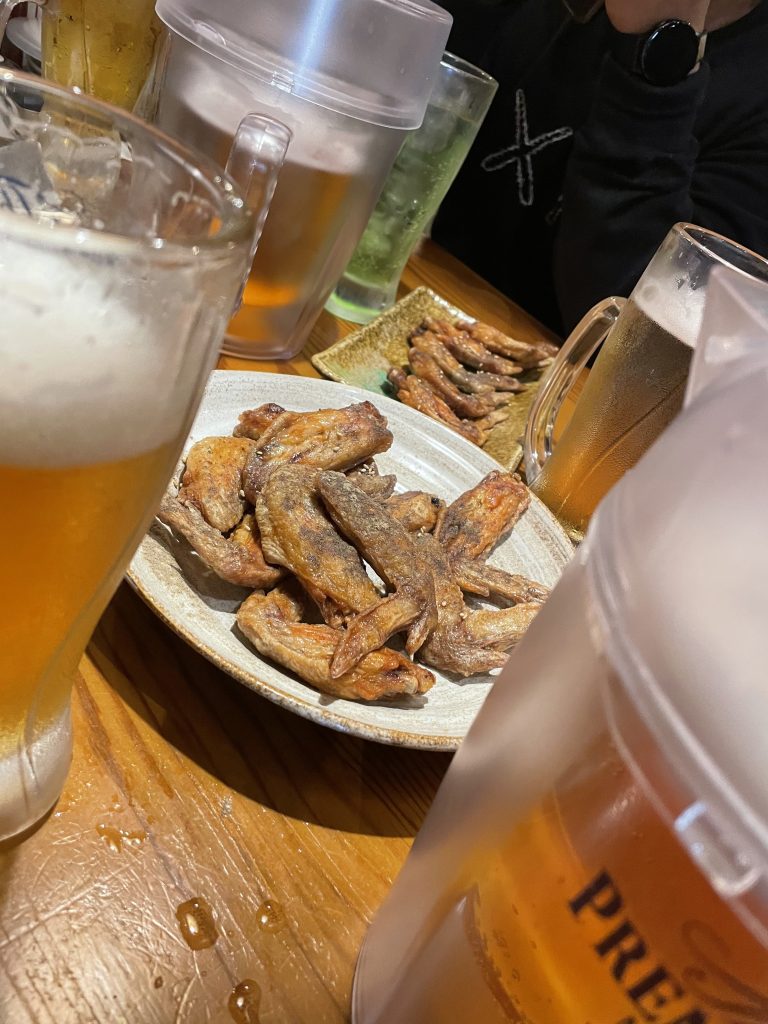
If you only try one place from this whole post, make it Yadai Ya, Fussa Station west exit, a one-minute walk from the station. This is, without question, my personal favorite izakaya from my entire three years here. A group of us from my unit ended up there more nights than I can count, and it’s genuinely one of the best atmospheres I’ve experienced anywhere, not just in Japan. They’re known for Nagoya-style fried chicken wings and a giant okonomiyaki that’s meant for the table to share. Those wings are the same Nagoya style as the ones I raved about at Yamachan in Tachikawa, and honestly, they come remarkably close to that same taste and quality. These are genuinely some of the best wings I’ve ever had anywhere. Order them alongside an Asahi, same as I’d tell you at Yamachan, it’s the right move every time. If you want to understand why I keep talking about izakayas the way I do in this post, this is the place that will show you.
My honest advice: start at a place like Torikizoku for your first month to get comfortable with how ordering works, then branch out to a place like Yadai Ya once you’ve got your bearings. You’ll get a much better sense of the neighborhood that way.
If you’re bringing family and want an earlier, calmer night, many izakayas are genuinely fine with kids in the early evening, before the later crowd shows up and the atmosphere shifts toward a straightforward drinking spot. It’s not the norm to see families there late at night, but early evening is a different story, and nobody will bat an eye.
A Few Practical Things I Wish I’d Known Sooner
Most izakayas allow smoking, and non-smoking sections are rare to nonexistent. If that’s a dealbreaker for you, ask about ventilation or look for one of the increasingly common non-smoking spots, but don’t expect to find one easily.
If you want privacy for a bigger group, ask if they have a koshitsu, a private room. Not every place has one, but the nicer or larger izakayas often do.
And if someone offers you “happoshu” instead of regular draft beer, know that it’s a cheaper, lower-malt alternative that tastes noticeably different. If you want the real thing, ask specifically for “nama biiru.” It’s a small phrase that makes a real difference.
Japanese Word to Know: kanpai (乾杯) Pronounced kahn-pai (rhymes with “pie”). “Cheers.” Said the moment glasses are raised, before the first sip, every single time, at every table. Skipping it looks a little odd, so get comfortable saying it loudly and often. It’s one of the easiest words to pick up here, and one of the most useful.
Frequently Asked Questions
What is an izakaya, exactly?
A casual Japanese eating and drinking establishment where you’re seated for the whole visit and order a rotating series of small shared dishes alongside your drinks, rather than one large meal.
What does otoshi mean and do I have to pay for it?
Otoshi is a small starter dish served automatically when you sit down, and yes, it’s a standard charge, usually a few hundred yen, similar in spirit to a table or seating charge.
Is nomihodai worth it?
If you and your group plan to have three or more drinks within the time limit, usually 90 minutes to 2 hours, it’s typically good value. If you drink slowly or want higher-end sake or whiskey, paying by the glass is often the better option.
Are izakayas kid-friendly?
Many are relaxed about families in the early evening, before the later crowd arrives and the atmosphere shifts. It’s not typical to bring young kids late at night, but an early dinner is usually fine.
Have a specific izakaya question, or want a recommendation for a certain part of Fussa? Contact me and I’ll get back to you.