 By Johnathan
 Mount Mitake sits out in the Okutama area, past Ome, and it’s one of those day trips that feels a lot farther from Tokyo than it actually is, especially if you’re starting from Fussa instead of central Tokyo. I went with a group from my unit. We rode the cable car up, hiked some of the trails, walked through the shrine at the top, and ate soba in the little mountain village once we’d worked up an appetite. Here’s the real version of what to expect, plus actual directions from Fussa, since most guides only explain how to get there from Shinjuku.
Getting There From Fussa
This is the part most guides skip, and it’s actually one of the advantages of living out here. Fussa Station sits directly on the JR Ome Line, and so does Mitake Station, just much further down the same line. You don’t need to backtrack toward Shinjuku or deal with the Chuo Line at all.
From Fussa, get on the Ome Line heading away from Tokyo, toward Ome. Since 2023, most trains split their service at Ome Station, so plan on changing trains there even though it’s technically one continuous line. From Ome, continue on the Ome Line through Miyanohira, Hinatawada, Ishigami-Mae, Futamatao, Ikusabata, and Sawai, until you reach Mitake Station. All told, it’s roughly an hour from Fussa, and a lot of it is a nice window into a much greener part of western Tokyo than what you’re used to seeing day to day. The fare is cheap, only a few hundred yen each way, and your IC card covers the whole thing without needing a separate ticket.
From Mitake Station, a short bus ride gets you to Takimoto, the base station for the cable car. Buses run a few times an hour, so you’re not stuck waiting long even if you just miss one. From there, grab a round trip cable car ticket, it’s a little over a thousand yen for adults, and it covers you for the ride back down later too.
The Cable Car
This cable car is no joke. It’s one of the steepest funicular lines in the entire greater Tokyo area, and you feel every bit of that incline on the way up. It only takes about six minutes, but it’s a genuinely dramatic ride, not some gentle scenic lift. One detail worth knowing: dogs are allowed on board in a designated section, so it’s normal to see people riding up with their dogs.
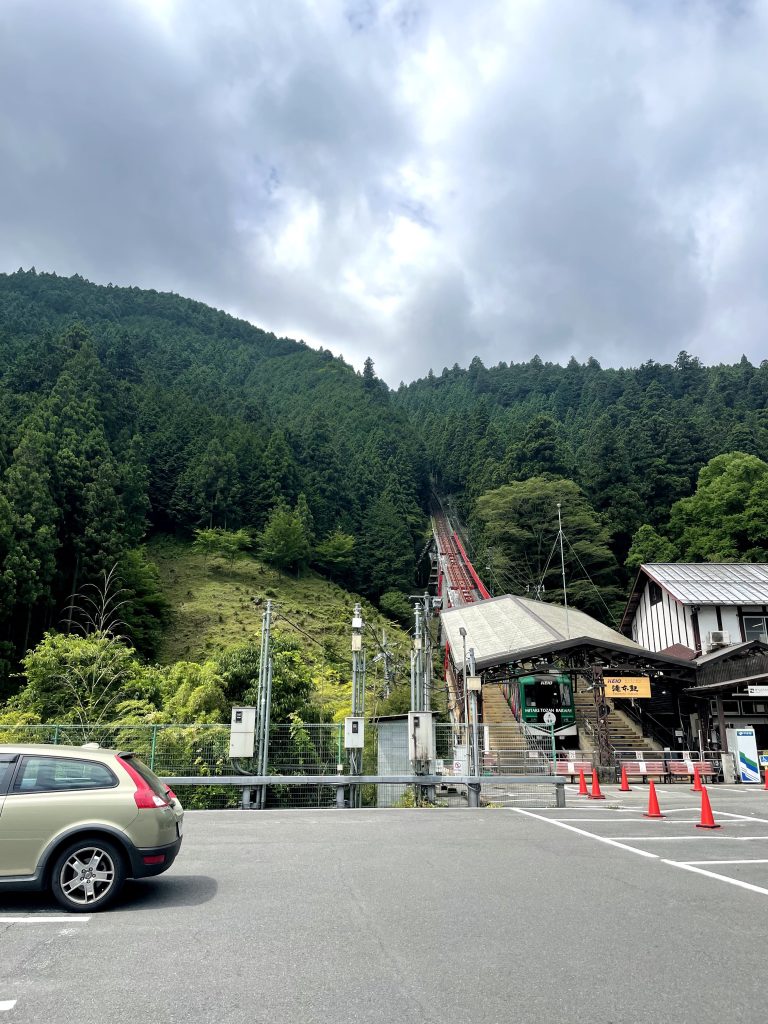
There’s also a lift further up, but it doesn’t run parallel to the cable car from the base. It picks up from the top of the cable car and continues a short stretch further to an observation platform, so it’s more of a bonus extension than an alternative way up.
The Walk to the Shrine, and Where the Trails Get Real
Once you’re off the cable car, it’s about a 20 minute walk up to Musashi Mitake Shrine. This stretch is genuinely charming, a small mountain village lined with old wooden inns, souvenir shops, and small restaurants, the kind of place that feels like it’s been quietly operating the same way for generations. In a lot of cases, it has. Some of these buildings are shukubo, traditional shrine lodgings that have hosted pilgrims climbing this mountain for centuries and still take overnight guests today, complete with tatami rooms and home-cooked meals if you ever wanted to turn this into more than a day trip. Even just passing through without staying the night, there’s something about walking that stretch that feels different from anywhere else nearby, quieter, older, less concerned with moving fast. Shop owners along the path are used to hikers passing through and are generally friendly even if you don’t speak much Japanese, and it’s worth slowing down here rather than rushing straight to the shrine.
The walk up to the shrine itself isn’t too demanding. Where things actually get steep is if you branch off onto the mountain’s real trail network afterward. There are several numbered trails plus routes leading toward the Rock Garden, a narrow forested valley further along the mountain with moss-covered stones and a stream running through the middle of it. Two waterfalls anchor this stretch, Nanayo Falls, a cascade that drops in seven distinct levels, and Ayahiro Falls further along. The path connecting them runs just under a mile, and it’s a genuinely different kind of scenery than anything back in Fussa, quiet, green, and a lot cooler under the tree cover. Some of those stretches turn into genuine climbing, stairs, inclines, the whole deal. We found this out firsthand. If you’re planning to do more than just the shrine walk, wear real hiking shoes and expect your legs to know about it the next day.
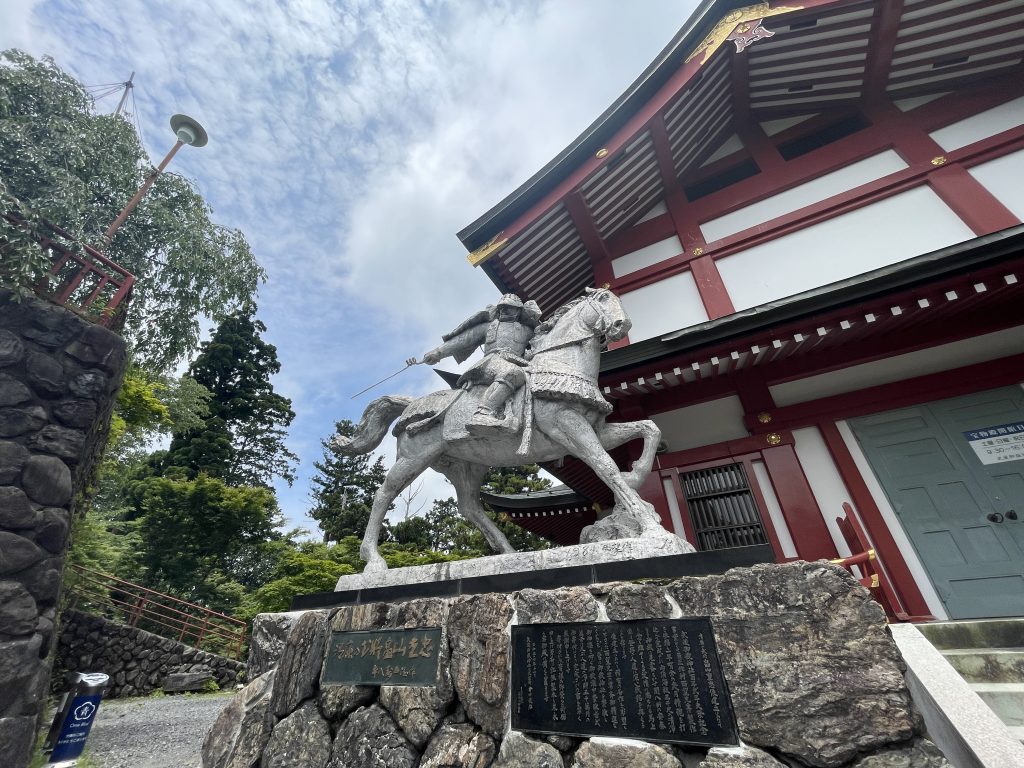
There’s also a viewpoint called Nagao-daira not far past the shrine, an easy detour if you want another good view without committing to a full extended hike. If you’ve still got energy after the Rock Garden, some trails continue on toward Mount Otake, a genuinely tougher peak further into the mountain range, but that’s a longer commitment and not something to attempt if you’re already tired from the walk out.
Musashi Mitake Shrine
This shrine has been a center of mountain worship for somewhere around 2,000 years, which is a genuinely wild number to sit with once you’re standing in front of it. Some records place its founding as far back as the first century BC, which means people have been climbing this same mountain to pray here since long before Japan looked anything like it does now. It’s dedicated to a wolf deity, and because of that, it’s become a popular spot for people to bring their dogs for a blessing. You’ll see far more dogs wandering the grounds here than at almost any other shrine in the region, which gives the whole place a slightly different feel than the usual quiet, formal shrine visit. There’s a treasure hall next to the shrine with a collection of wolf statues and historic artifacts, including old samurai armor and swords, if you want to go a little deeper than just the main grounds, entry runs a few hundred yen.
If you’re interested in the mountain’s other mythology, there’s also a Tengu Rock about 20 minutes further along the trail, a massive boulder shaped like a tengu’s long nose, along with a centuries-old cedar tree where legend says a tengu once perched. Worth the short extra walk if you’ve got the legs left for it.
If You Have Time Before Your Train Back
Don’t rush straight back to Fussa the second you’re off the cable car. Down near Mitake Station itself, the Tama River carves through a genuine gorge, and there’s a suspension bridge that gives you a good view down into the valley. It’s an easy, flat walk, a nice contrast after a day of climbing, and a good way to stretch your legs out before sitting on a train for an hour. If you’ve got any energy left and an interest in art, the Gyokudo Art Museum is right in the same area, a small museum with a quiet Japanese garden attached, worth a stop if you want to slow the day down before heading home.
What to Eat
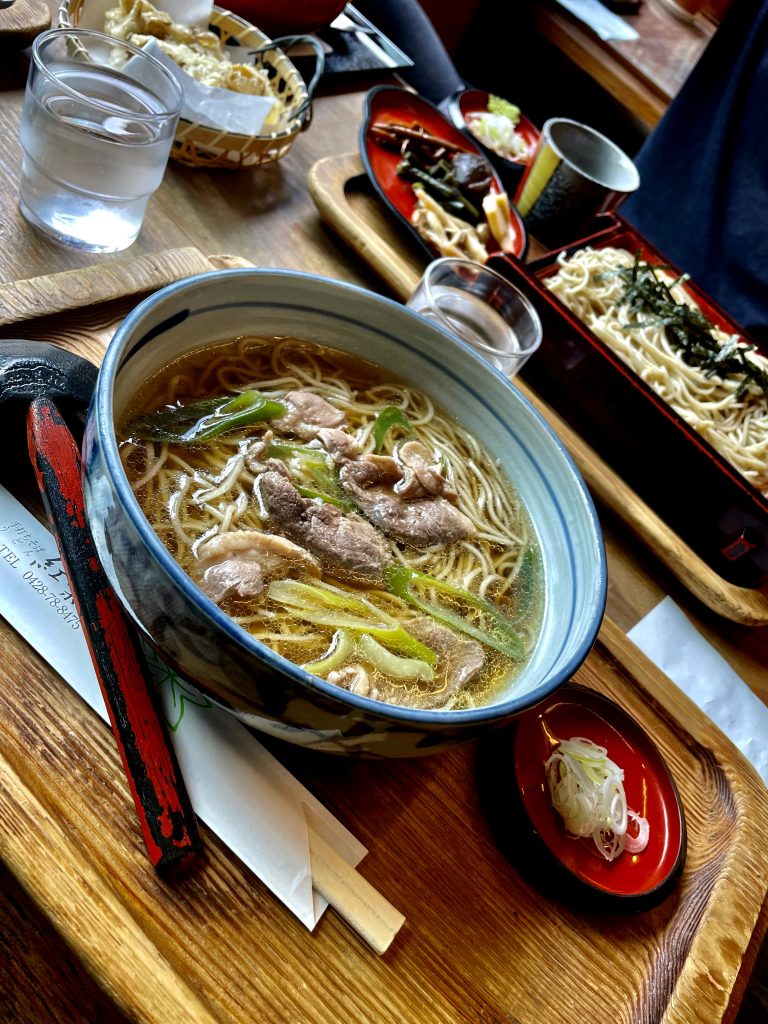
Once you’re back down near the village, or even partway along the main trail, you won’t have trouble finding soba. It’s genuinely the food of this mountain, and it’s been served to hikers and pilgrims climbing here for generations, long enough that it’s basically part of the tradition at this point, not just a convenient lunch option. Small restaurants serve it alongside udon, tempura made from mountain vegetables, and hearty soups, often with a view out over the trees. After a real hike, sitting down with a warm bowl of soba is one of those simple pleasures that just hits differently. Some spots do a walnut dipping sauce version that’s worth trying if you see it on the menu, and it’s a genuinely different experience than the soba you’d get in Fussa or Tachikawa. Portions tend to be generous, which you’ll appreciate after a few hours on the trails.
Best Time to Go
Autumn is the obvious answer here. The foliage along the trails and around the shrine turns genuinely spectacular, typically peaking in mid to late November. It’s also, unsurprisingly, the most crowded time to visit. Spring has its own quieter charm, with fresh greenery along the same trails. If you want the trails to yourself, an ordinary weekday outside of peak leaf season is your best shot. Weekends here get genuinely busy, especially in autumn, so factor that into when you go if crowds aren’t your thing.
A Few Practical Notes
Bring cash. Some of the smaller restaurants and shops in the village near the shrine don’t take cards, and it’s a long way back down if you realize that too late. Get an early start if you want to do any real hiking beyond the shrine walk, since the last cable car down runs earlier than you’d expect, and you don’t want to be stuck figuring out the trail back down in the dark. And if you’re coming in cooler months, layer up, it’s noticeably colder at the top than it is back in Fussa, especially once the sun starts dropping.
Check the weather before you commit to the day too. The trails past the shrine get genuinely slick when wet, and the whole appeal of this trip is the hiking and the views, neither of which are much fun in the rain. If it’s a clear day, this is also one of the better spots in the region to catch a distant view of Mount Fuji, so it’s worth timing your visit for good visibility if that’s something you want to see.
Japanese Word to Know: jinja (神社) Pronounced jeen-jah. It means “Shinto shrine,” as opposed to o-tera (お寺), which means a Buddhist temple. Musashi Mitake Shrine is a jinja, and once this distinction clicks, it becomes a lot easier to understand what you’re actually looking at all over Japan.
Frequently Asked Questions
How do I get to Mount Mitake from Fussa?
Take the JR Ome Line from Fussa Station toward Ome, change trains at Ome Station since most services split there, then continue on the Ome Line to Mitake Station. From there, a short bus ride gets you to the cable car base at Takimoto. The whole trip takes about an hour.
How steep is the Mount Mitake cable car?
It’s one of the steepest funicular cable car lines in the greater Tokyo area. The ride itself only takes about six minutes, but the incline is dramatic the entire way.
Do I need to be an experienced hiker to visit Mount Mitake?
No. The walk from the cable car station to the shrine is a manageable 20 minutes. The mountain’s other trails, including routes toward the Rock Garden, get considerably steeper, so plan accordingly if you want to go further.
What should I eat at Mount Mitake?
Soba is the local specialty, served at small restaurants in the mountain village near the shrine, often alongside udon and mountain vegetable tempura.
Can I bring my dog to Mount Mitake?
Yes. The cable car allows pets in a designated section, and Musashi Mitake Shrine, dedicated to a wolf deity, is a genuinely popular spot for pet owners specifically.
Is Mount Mitake better than Mount Takao for a day trip?
They’re different experiences rather than one being strictly better. Mount Takao is closer to central Tokyo and busier, while Mitake takes a bit longer to reach but feels noticeably more remote and quiet once you’re there, especially in the village near the shrine. If you’ve already done Takao and want something that feels more like a genuine escape, Mitake is the better pick.
Have a question about visiting Mount Mitake, or want trail recommendations based on your fitness level? Contact me and I’ll get back to you.